Table of Contents
 Loading...

 Reload document
 Open in new tab


$0.00
Prastika Krisma Jiwanti, PhD – Associate Professor, Nanotechnology Engineering, Faculty of Advanced Technology and Multidiscipline, Universitas Airlangga, Surabaya, East Java, Indonesia
Mohammad Kalimanjaro – Research Assistant, Universitas Airlangga, Surabaya, East Java, Indonesia
Series: Nanotechnology Science and Technology; Chemistry Research and Applications
BISAC: SCI013100; TEC021000; SCI013010
DOI: https://doi.org/10.52305/SWCZ4357
The evolution of carbon-based materials for electrochemical sensing has seen remarkable advancements over the last twenty years, enhancing both their fundamental understanding and practical applications. Initially, materials like graphite and carbon black were popular as cost-effective and versatile electrode modifiers. However, the introduction of sophisticated nanostructures such as graphene, carbon nanotubes, carbon quantum dots, and boron-doped diamond nanoparticles has broadened the horizons of electrochemical sensing significantly. This book understands the fundamental electrochemical characteristics of carbon-based materials, such as their wide potential windows, impressive conductivity, and stability in extreme conditions. As research has progressed, these materials began to find applications in diverse areas, from environmental monitoring for detecting heavy metals, pesticides, and organic pollutants to pharmaceutical and biomedical sensing, where they are used to identify disease biomarkers, therapeutic drugs, and neurotransmitters. Their application has extended into food safety, with sensors made from carbon nanomaterials being employed to monitor synthetic dyes, pesticide residues, and harmful contaminants.
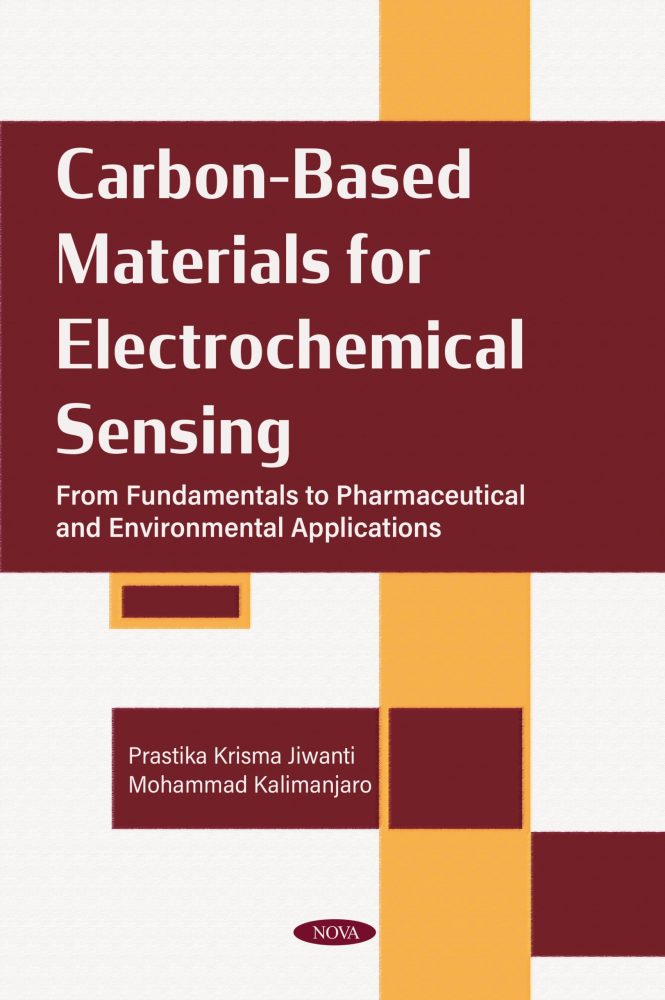
Carbon-Based Materials for Electrochemical Sensing: From Fundamentals to Pharmaceutical and Environmental Applications is structured into four main sections, including the fundamentals of electrochemical sensing and carbon-based material; key applications in pharmaceutical and environmental monitoring; signal amplification and integration with IoT and future perspectives in wearable sensors. This book aims to be a comprehensive resource for researchers, students, and professionals, inspiring future innovations in electrochemical sensing.
We publish over 800 titles annually by leading researchers from around the world. Submit a Book Proposal Now!
